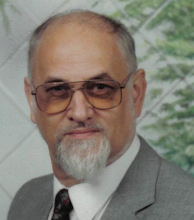
Some years ago I studied for the Diploma in Total Quality Management (TQM) and with special reference to the place of the Investors In People award to schools. At that time I was also awarded a certificate as an Internal Quality Auditor and became a member of the Chartered Quality Institute. I say this, not because of any wish to 'blow my own trumpet' but rather to indicate some real passion and understanding of the subject of Quality Assurance in schools and colleges.
So, perhaps, my title could have been 'e-Portfolios - not just for students'. The fact that an e-Portfolio can equally be used for students, teachers, institutions or even whole Districts or Local Authorities needs to be understood. My 8-Page Brochure is worth looking at in this context.
Within TQM circles, one of the Prime Directives is that documentation should be easy to find and appropriate to the reader's needs. It is my belief that a well laid-out e-Portfolio is by far the best means of doing this. See the Ridgwater College site, which is no more than a collaborative e-Portfolio where others can read and respond to articles and submit new artefacts.
The point that I am making is that e-Portfolios are not just for children or students searching for their first job or even for PDP. The same tool, used by the Principal of a college or an 8 yr-old will serve their needs equally well
So, perhaps, my title could have been 'e-Portfolios - not just for students'. The fact that an e-Portfolio can equally be used for students, teachers, institutions or even whole Districts or Local Authorities needs to be understood. My 8-Page Brochure is worth looking at in this context.
Within TQM circles, one of the Prime Directives is that documentation should be easy to find and appropriate to the reader's needs. It is my belief that a well laid-out e-Portfolio is by far the best means of doing this. See the Ridgwater College site, which is no more than a collaborative e-Portfolio where others can read and respond to articles and submit new artefacts.
The point that I am making is that e-Portfolios are not just for children or students searching for their first job or even for PDP. The same tool, used by the Principal of a college or an 8 yr-old will serve their needs equally well